Week Two
More About Ephesus
• Historical Context: Ephesus was a major port city near the Cayster River’s mouth, one of the Roman Empire’s largest and most prosperous. A key trade hub connecting East and West.
• Cultural Significance: Renowned for the Temple of Artemis, a Wonder of the Ancient World, it drew pilgrims and boosted commerce. A cultural center with a grand theater and libraries, it hosted a diverse population. Early Christianity, linked to Paul and John, thrived but faced pagan worship challenges.
• Key Features: Wealthy, cosmopolitan, with Greek, Roman, and Anatolian influences; Christians navigated commercial and religious pressures.
Geography and Road Connections: Ephesus was on the Aegean coast, with flat, fertile plains and a bustling harbor (now silted). The Roman Road to Smyrna, about 50 miles (80 km) north, followed the coast through flat terrain, passing smaller towns like Miletus. Travel by foot took ~2–3 days, with well-maintained roads facilitating trade and communication. The route was direct, hugging the coastline for ease of travel.
• Word Origin (etymology): The origin of Ephesus is uncertain, but it likely derives from a pre-Greek Anatolian language, possibly Luwian or Carian, given the city's ancient history predating Greek settlement. Some scholars suggest it may relate to the Hittite name Apaša or a similar term, possibly meaning "place of bees" or connected to a local deity (e.g., the Ephesian Artemis, associated with fertility and nature). In Greek, it has been linked speculatively to ephessasthai ("to set upon" or "approach"), but this is not definitive.
• Symbolic Context: Ephesus was a major commercial and religious hub, home to the Temple of Artemis (Acts 19:24–28). The name’s possible connection to bees or fertility might reflect its vibrant, industrious culture, though Revelation 2:1–7 critiques the church for losing its "first love" despite its diligence.
• Post-Letter/Current Status: Ephesus declined as its harbor silted up by the Byzantine period, leading to abandonment by the Middle Ages. Now near Selçuk, Turkey (population ~40,000), it’s a UNESCO World Heritage Site with ruins like the Library of Celsus and Great Theatre, attracting tourists. The Christian community faded, but the area retains historical Christian significance (e.g., House of the Virgin Mary). Ongoing excavations in 2025 revealed newly restored sections, enhancing visitor access.
Ephesus – The Harbor That Died
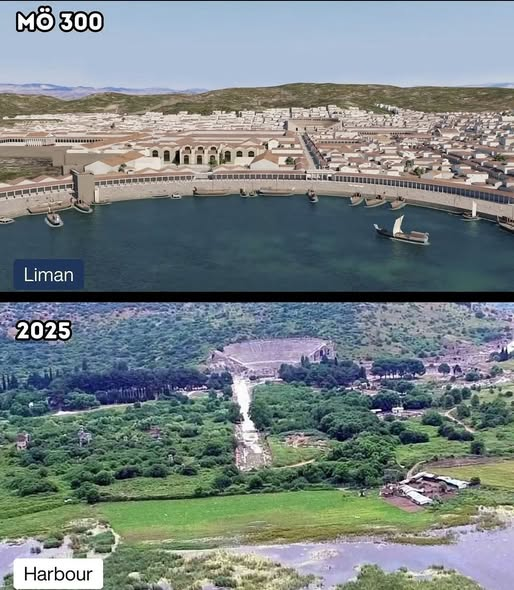
Once the third-largest city in the empire, Ephesus died when its harbor silted-up harbor moved the coastline six miles away. The church Jesus praised for endurance slowly lost its first love and, within centuries, its lampstand. The same silt that buried the harbor buried the greatest church in Asia Minor, a silent warning to every congregation that forgets why it exists.
More About Laodicea
• Historical Context: Laodicea, a wealthy trade city on major routes, was known for banking, textiles, and a medical school producing eye salve.
• Cultural Significance: Its external water supply arrived lukewarm, a metaphor for its “lukewarm” Christian community (Revelation 3:16). A significant Jewish population and wealth fostered spiritual complacency among Christians.
• Key Features: Rich, self-reliant, with a focus on commerce and medicine; Christians struggled with spiritual apathy.
• Geography and Road Connections: Laodicea sat on a fertile plateau ~1,100 ft
above sea level in the Lycus River valley, 6 miles south of Hierapolis and 10 miles west of Colossae, forming a triangular trade hub. It lay at the junction of two major Roman roads: (1) the southern branch of the great eastern highway from Ephesus (100 miles west) through the Meander and Lycus valleys to Apamea and Syria; and (2) a north–south route from Pergamum and Sardis through Philadelphia to the Maeander plain and Attalia on the coast. This crossroads position made it a commercial gateway for Phrygian wool, dyed textiles, and regional produce, with toll revenues fueling its wealth. The city’s aqueduct from hot springs 5 miles south at Denizli delivered tepid, mineral-laden water —infamous for inducing vomiting and symbolizing spiritual lukewarmness.
• Word Origin (etymology): Another Greek compound: laos (λαός, "people") + dikē (δίκη, "justice" or "judgment"), meaning "justice of the people" or "rule of the people." The city was named after Laodice, the wife of Antiochus II, a Seleucid king, but the etymology suggests a broader concept of governance or fairness.
• Symbolic Context: Laodicea’s church (Revelation 3:14–22) is rebuked for being “lukewarm,” neither hot nor cold, reflecting its complacency and self-reliance. The name’s implication of justice or rule contrasts with the church’s failure to live up to God’s righteous standards, relying instead on material wealth.
• Post-Letter/Current Status: Laodicea declined due to earthquakes and invasions. Near modern Denizli, Turkey (metro population ~712,000), it’s an archaeological park with ruins like a theater and churches. Excavations continue, but no modern city exists on the site. The Christian community faded, and the area is Muslim-majority. In 2025, ongoing restorations enhanced visitor paths and site accessibility.
Laodicea’s Lukewarm Aqueduct
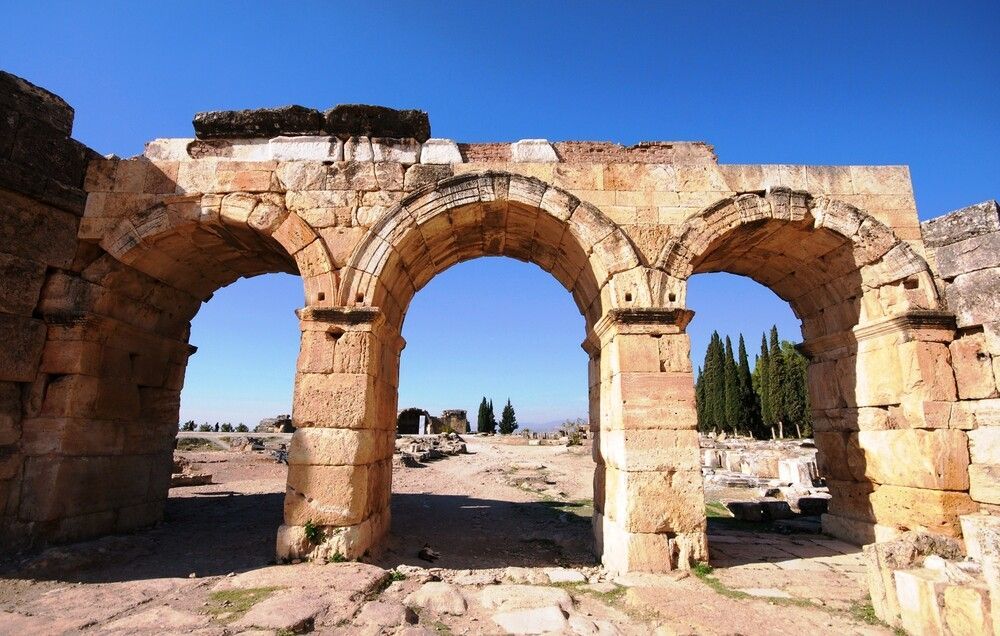
Hot springs at Denizli cascaded down white travertine terraces six miles away. By the time the water reached Laodicea it was tepid and nauseating. Jesus used their own plumbing to diagnose their spiritual temperature: “Because you are lukewarm… I will spit you out of my mouth.”
Laodicean Eye-Salve Factory
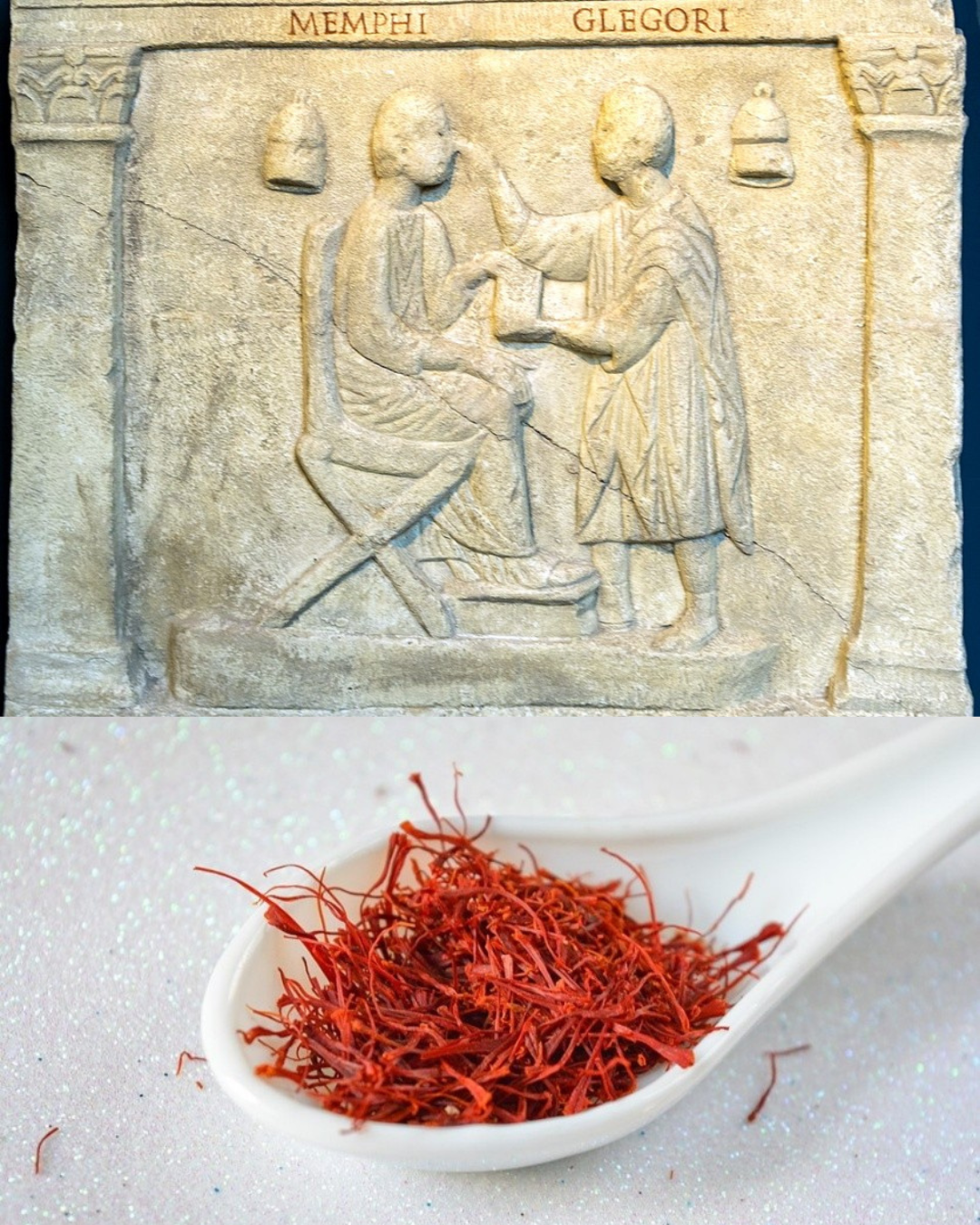
The medical school produced the ancient world’s most famous eye ointment. Thousands of stone tablets for grinding Phrygian powder have been found. Jesus offers the only salve that actually heals spiritual blindness.
Black Wool of Laodicea

The city grew rich selling glossy raven-black wool. Jesus says, “You think you are clothed in splendor, but you are naked.” Their proudest product became the perfect picture of self-deception.
Temple of Artemis – One Column Left
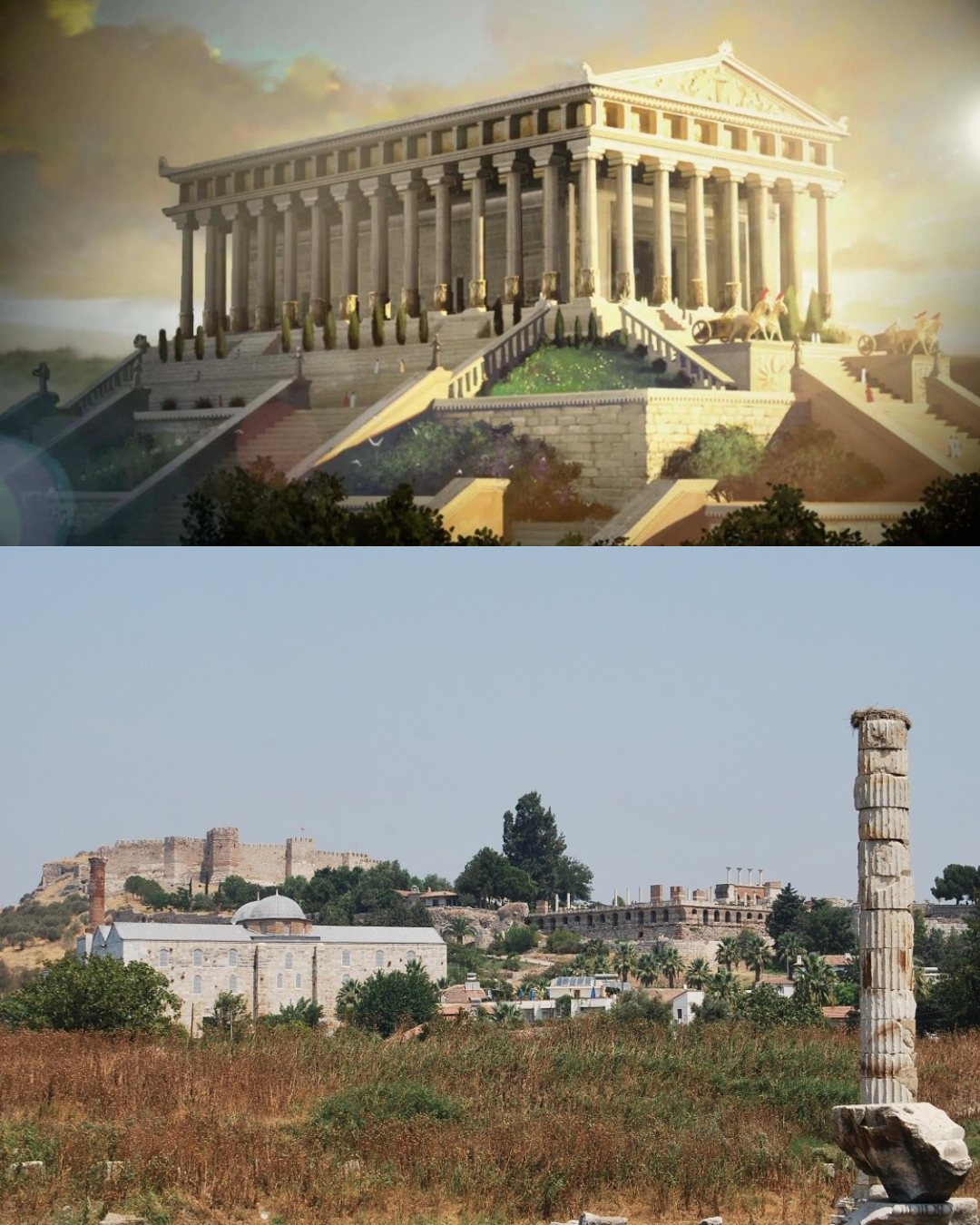
Four times larger than the Parthenon, 127 columns 60 feet high. Today only one lonely rebuilt column stands in a swamp. When the gospel arrived, silversmiths rioted because people stopped buying Artemis shrines (Acts 19). Leaving idols cost money; leaving first love cost everything.
How About the Heresies?
The seven letters refer to four named heresies:
•Balaam – the prophet that opposed Moses
•Jezebell – the evil Queen of Israel who opposed Elijah
•Nicolaitans – perhaps revealed in word origins
•Synagogue of Satan – certainly satanic; ultimately embedded and surprising
Beware: from the time that John the Beloved recorded the letters the identity of each group has been speculated; however not definitively identified. Some suggest that these might be only symbolic. Perhaps each refer to a ruling evil principality or to various groups over time.
Also consider that these four are not mutually exclusive; they often overlap (e.g., a “Jezebel” spirit can empower “Nicolaitan” hierarchy within a “Synagogue of Satan”). We consider them
as diagnostic lenses rather than fixed organizations.
Regardless we briefly consider scriptural references and word origins to gain a sense as to what each heresy represents.
Balaam
Rev 2:14 –“But I have a few things against you: you have some there who hold the teaching of Balaam, who taught Balak to put a stumbling block before the sons of Israel, so that they might eat food sacrificed to idols and practice sexual immorality.”
• Scripture
OT: Num 22–25, 31:16; a Moabite prophet-for-hire who tried to curse Israel but was forced to bless; later counseled Midianite women to seduce Israelite men into idolatry and immorality (the “Balaam strategy”).
NT: 2 Pet 2:15; Jude 11 – greed-driven false prophecy.
• Historical
1st century: Likely itinerant Jewish or pagan “prophets” in Pergamum who, for pay or status, urged compromise with imperial cult meals and temple prostitution.
Post-apostolic: Any teacher who blesses syncretism for personal gain
(e.g., Simon Magus types see Acts 8:9-13; 18-24).
•Word origin (etymology):
Hebrew: בִּלְעָם bil‘am = “swallow the people” or “lord of the people”;
implies domination through corruption.
• Current
Ministries or influencers who monetize spiritual compromise: endorsing immoral cultural norms, partnering with anti-Christian power structures, or teaching “grace” that winks at idolatry for the sake of relevance or revenue.
Jezebel
Rev 2:20–23 – “But I have this against you, that you tolerate that woman Jezebel, who calls herself a prophetess and is teaching and seducing my servants to practice sexual immorality and to eat food sacrificed to idols. I gave her time to repent, but she refuses to repent of her sexual immorality. Behold, I will throw her onto a sickbed, and those who commit adultery with her I will throw into great tribulation, unless they repent of her works, and I will strike her children dead. And all the churches will know that I am he who searches mind and heart, and I will give to each of you according to your works.”
• Scripture
OT: 1 Kings 16–21; 2 Kgs 9 – Phoenician queen who imported Baal worship, killed prophets, and used sexual seduction as political/religious policy.
NT: Symbolic “type” of a spirit, not necessarily one literal woman in Thyatira.
• Historical
1st century: A prominent female (or code-named) leader in the Thyatira guild system who claimed prophetic authority to justify participation in trade-guild banquets (idolatry + immorality).
Early church: Montanist “New Prophecy” prophetesses were sometimes labeled “Jezebel” when they overrode apostolic order.
• Word origin (etymology):
Heb. אִיזֶבֶל ’îzebel = “Where is the Prince?” (Baal title) or ironic “un-exalted.” Carries connotations of foreign domination and spiritual harlotry.
• Current
Charismatic or institutional figures (male or female) who wield spiritual authority to normalize sexual license, occult practices, or syncretistic worship inside the church; often tied to controlling, manipulative leadership styles.
Nicolaitans
Rev 2:6, 15 – “Yet this you have: you hate the works of the Nicolaitans, which I also hate.”
• Scripture
Only named in Revelation; no other NT mention. Parallel to “teaching of Balaam” (v. 14) suggests similar compromise.
• Historical
1st century: Probably a sect in Ephesus and Pergamum advocating hierarchical clergy lording over laity while indulging in pagan liberties. Irenaeus (Adv. Haer. 1.26.3) and Hippolytus link them to Nicolaus of Acts 6:5 gone wrong—turning diaconal service into domineering “lords over the flock” (cf. 1 Pet 5:3).
• Word origin (etymology):
Linguistic clue: Gk. Νικολαΐτης Nikolaïtēs = νικάω (conquer) + λαός (people) → “conquerors of the laity.”
• Current
Any ecclesiastical system that creates a permanent priestly caste which:
(a) claims exclusive mediation,
(b) permits itself moral laxity denied to ordinary believers,
(c) uses spiritual authority to exploit rather than serve.
Seen in abusive mega-church hierarchies, cultic personality structures,
or clergy sex-abuse cover-ups.
Synagogue of Satan
Rev 2:9 – “I know your tribulation and your poverty (but you are rich) and the slander
of those who say that they are Jews and are not, but are a synagogue of Satan.”
Rev 3:9 – “Behold, I will make those of the synagogue of Satan who say that they are Jews and are not, but lie—behold, I will make them come and bow down before your feet, and they will learn that I have loved you.”
• Scripture
No OT direct parallel; echoes Deut 33:29 and Isa 66:5 (false brethren).
Paul’s “Israel after the flesh” vs. “Israel of God” (Rom 2:28–29; Gal 6:16).
• Historical
1st century: Local Jewish factions in Smyrna and Philadelphia who:
claimed covenant privilege, slandered believers to Roman authorities (informers), opposed the gospel as blasphemy.
Post-70 AD: Zealot or Pharisaic remnants who rebuilt rabbinic Judaism
in explicit rejection of Messiah.
Early church fathers (e.g., Ignatius, Martyrdom of Polycarp) use the phrase for any group falsely claiming Abrahamic legitimacy while persecuting the church.
• Word origin (etymology):
“Synagogue” = assembly; “of Satan” = adversarial assembly.
Rhetorical inversion: the true “assembly of YHWH” is now the church (Heb 12:22–24).
• Current
Any movement or institution that:
(a) wears the garments of covenant people (Christian, Jewish, or “Abrahamic”),
(b) actively opposes the gospel or persecutes believers,
(c) operates under religious cover while serving anti-Christ agendas.
Examples: hyper-nationalist “Christian” groups that bless violence; certain messianic pretenders; or interfaith coalitions that silence gospel witness to preserve political access.